Nutrition
Hanwoo Native Cattle
Korean Hanwoo — a meal that nourishes
The Benefits of Hanwoo
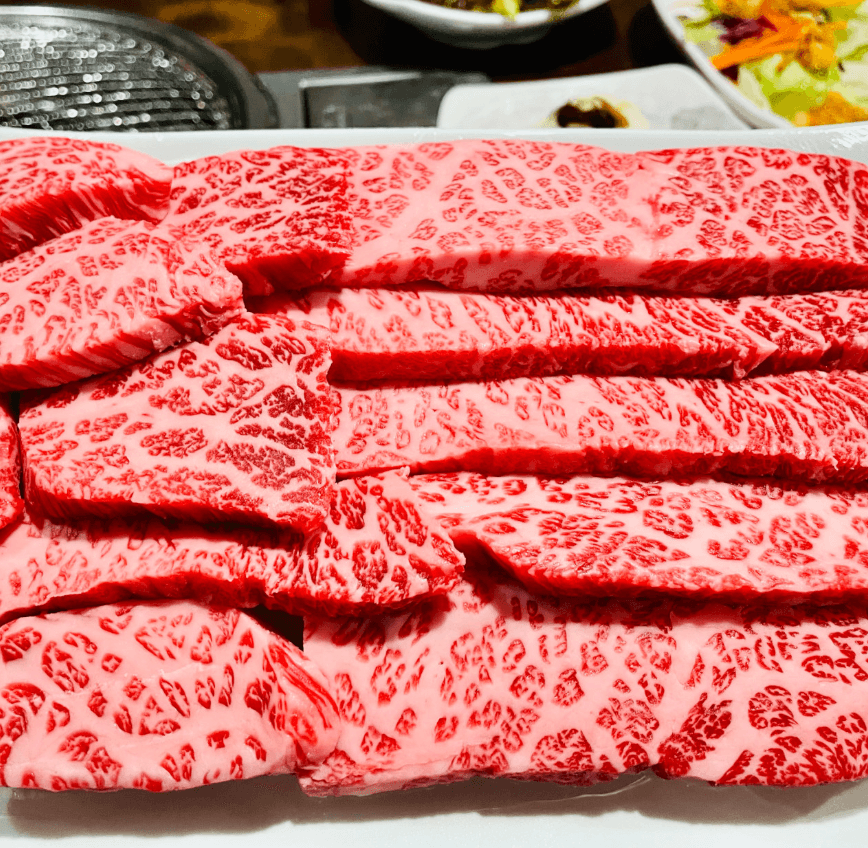
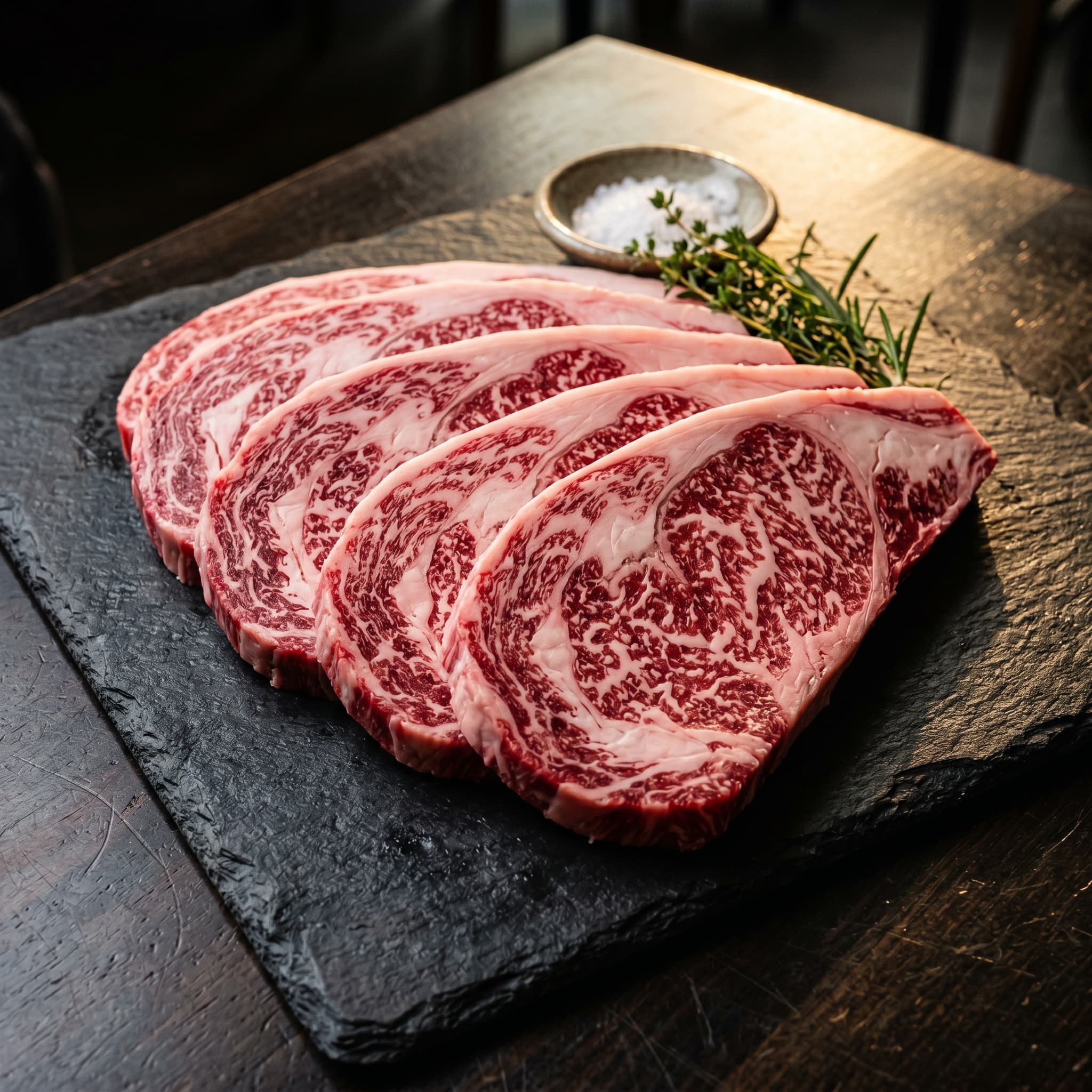
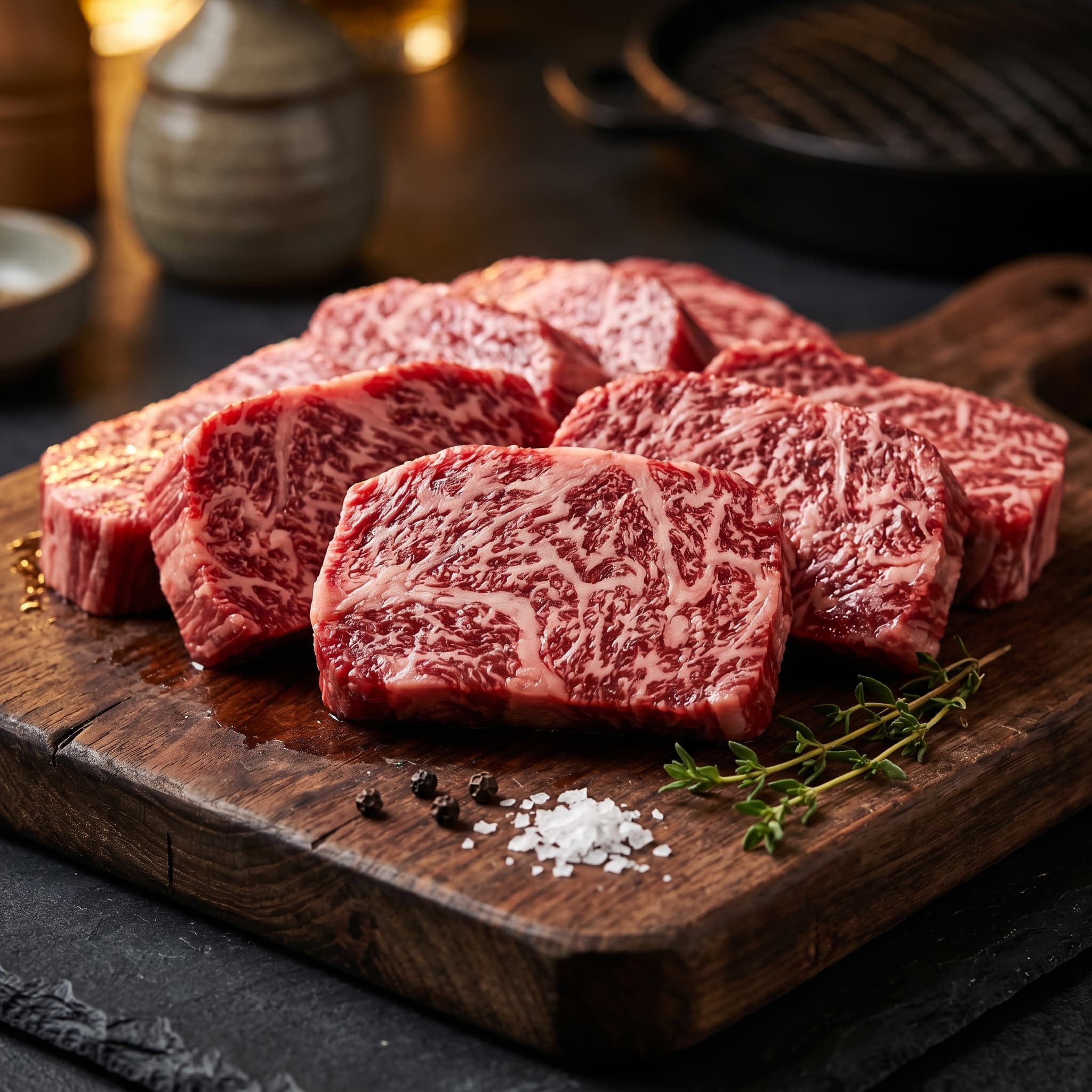
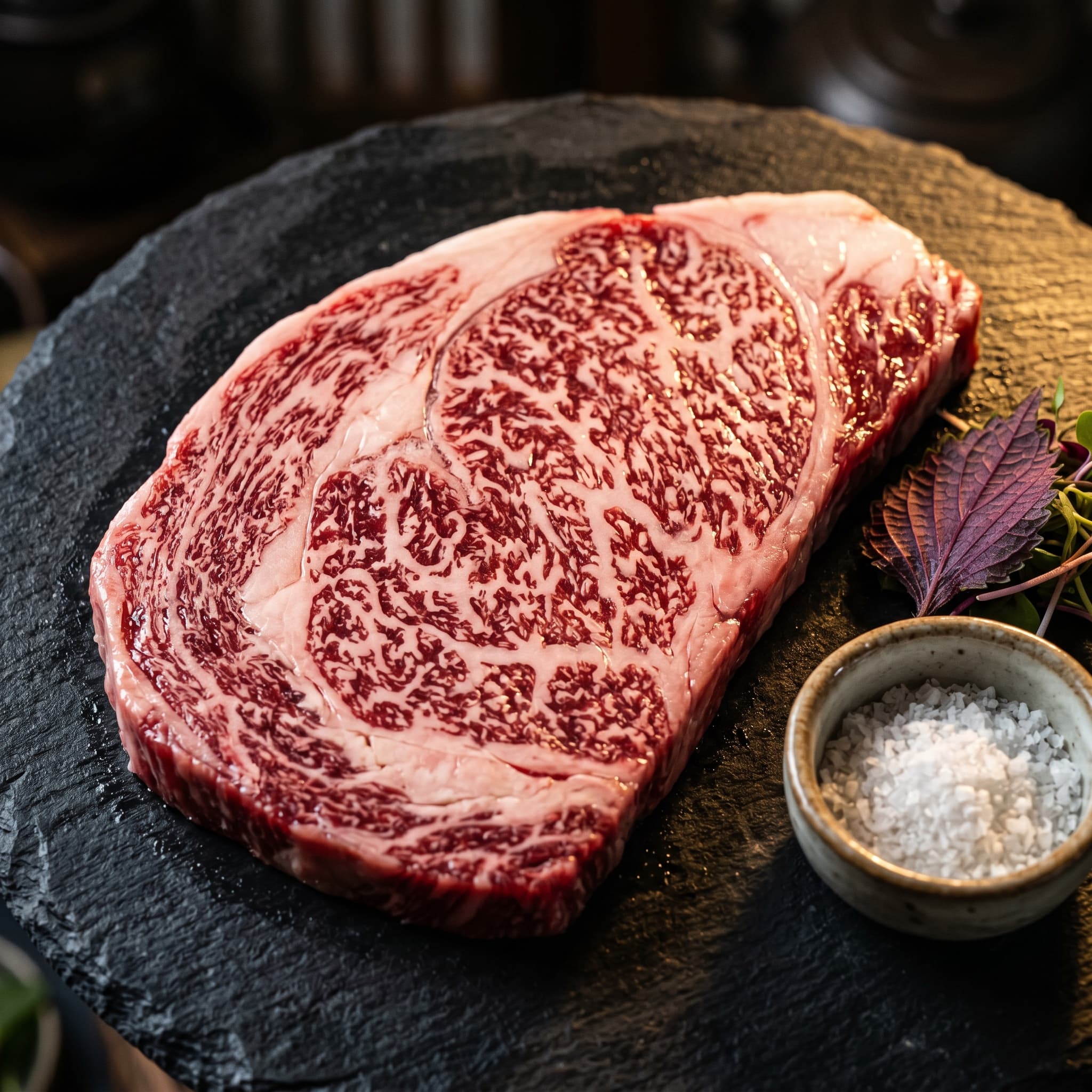
Per 100 g, Hanwoo delivers around 20 g of complete protein, with heme iron, zinc, and vitamin B12 in abundance. The marbling of grade 1++ isn't simply fat — it's monounsaturated, oleic-acid–rich (the same family as olive oil) — which is why Korean households have long served Hanwoo as a restorative meal. A good meal is a good moment.
Complete Protein
All nine essential amino acids in one cut. About 20 g per 100 g.
Heme Iron · Zinc
Highly absorbable heme iron supports recovery from fatigue and anemia. Zinc balances immunity and taste.
B Vitamins
Rich in B12, niacin, and B6 — supporting energy metabolism and nerve health.
Oleic Acid
The heart of 1++ marbling: monounsaturated fat from the same family as olive oil — the source of that melt-in-the-mouth flavor.
* Based on data from Korea's Food Nutrient Database, the Rural Development Administration, and the Hanwoo Self-Help Fund. Actual nutrients vary by cut and individual animal.
Grade Standard
How Korean Beef Is Graded
Korean beef is judged on quality and yield separately, then combined. The one that guides a diner's choice is the first: the quality grade.
Quality grade
Marbling, meat colour, fat colour, texture and maturity are assessed together and sorted into five grades: 1++, 1+, 1, 2 and 3.
Grades by marbling score
| 1++ | No.9No.8No.7 |
|---|---|
| 1+ | No.6 |
| 1 | No.5No.4 |
| 2 | No.3No.2 |
| 3 | No.1 |
Marbling is scored from No.1 to No.9 by how fat is distributed across the cut face of the longissimus muscle. Note that 1++ contains three separate steps: No.7, No.8 and No.9.
At Hanwoo Gojip, only 1++ goes into the display case, every day.
Marbling, No.1 to No.9

Meat colour, No.1 to No.7
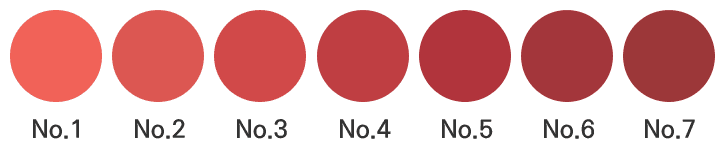
Fat colour, No.1 to No.7

Grading is done by examining the cut face of the loin itself; the charts above show the reference for each number.
Images · Korea Institute for Animal Products Quality Evaluation, livestock grading criteria (via Korea Livestock Products Processing Association)
The other four factors
- Meat colour
- The colour of the cut face. No.2–No.6 is the normal range.
- Fat colour
- The colour of intramuscular and surrounding fat. No.1–No.6 is normal.
- Texture
- Water-holding capacity and springiness of the cut face.
- Maturity
- Judged by cartilage ossification on the vertebral spinous process.
Yield grade
Carcass weight, back fat thickness and loin eye area are combined into a yield index, sorted into A, B and C. It describes how much meat a carcass gives, not how it tastes.
Where the judgement is made
On the left half carcass, a cut is made between the last thoracic vertebra and the first lumbar vertebra, and the exposed face of the longissimus muscle is examined. Back fat is measured in millimetres at a fixed point on that face; the loin eye is measured in square centimetres.
Source · Enforcement Rules of the Livestock Industry Act (detailed grading criteria), Korea Institute for Animal Products Quality Evaluation, Korea Livestock Products Processing Association
Cuts